Word Chums
- 4.6
- Rating
- 1.00M
- Installs
- Free
- Price
 Analysis by App-foxy
Some word games are built for a quick solo puzzle, while others are really about the people sitting on the other side of the board. My experience with Word Chums puts it firmly in the second group. It is a free word board game from PeopleFun, and its main appeal is not simply finding words quickly. The interesting part is the way each move becomes a small decision about space, timing, and risk.
I found it easiest to enjoy when I treated it as a relaxed match rather than a test I had to win every time. A strong vocabulary helps, but it is not the whole story. You also need to notice where a word can be placed, what premium squares may become available, and whether a clever-looking move gives your opponent an even better reply. That combination gives the game more staying power than a basic word scramble.
The game is free to download and is rated for Everyone, which makes it approachable for families and casual players. It has been available since July 30, 2013, and its current version is 2.16.1. A 4.6 average from around 151 thousand ratings suggests that the format has found a large audience, while over 1 million installs show that it is not a niche word puzzle.
You May Also Like

 Blood Strike: 2.5 Anniversary
Blood Strike’s Loadouts Turn Every Drop Into a Tactical Gamble
A close look at Blood Strike’s custom loadouts: how fast access to signature weapons reshapes its battle royale rhythm, rewards preparation, and narrows the gap between fights.

 Pandora - Music & Podcasts
Pandora’s Music Is Easy to Start, but Harder to Recover
Pandora’s strength is its low-effort path from a seed to a station. Its weak spot is how much confidence it asks you to place in connection, setup, and quiet recovery.

 8 Ball Pool
 Is Built on Rivalries, Rematches, and Routine
A close look at the rivalries, rematches, shared routines, and unanswered safety questions that turn a quick pool match into a persistent mobile community.

 Samsung Music
’s Quiet Strength Is Playing What You Already Own
Its reach comes less from spectacle than from dependable access to a personal library. That simplicity is both the app’s strongest retention engine and its ceiling.

 AccuWeather: Weather Radar
AccuWeather Review: A Quick, Clear Forecast for Everyday Decisions
For everyday plans, the best forecast is the one you can understand quickly. AccuWeather makes rain timing, radar, and local conditions easy to act on, with a few trade-offs.

 Hill Climb Racing
Why Hill Climb Racing Still Turns Crashes Into One More Run
A tiny car, a bumpy hill and one more upgrade: Hill Climb Racing keeps resurfacing because its simple chaos makes every near-miss feel personal.
More From Our News Desk



The board matters as much as the word
I like how this section shifts attention from the letters in hand to the shared space both players are shaping. That perspective helps explain why a modest word can be a smart move and why a tempting placement may carry a cost. It also sets up the practical question of how the game’s structure supports—or sometimes slows down—that kind of thinking.
Why the central capability changes the experience
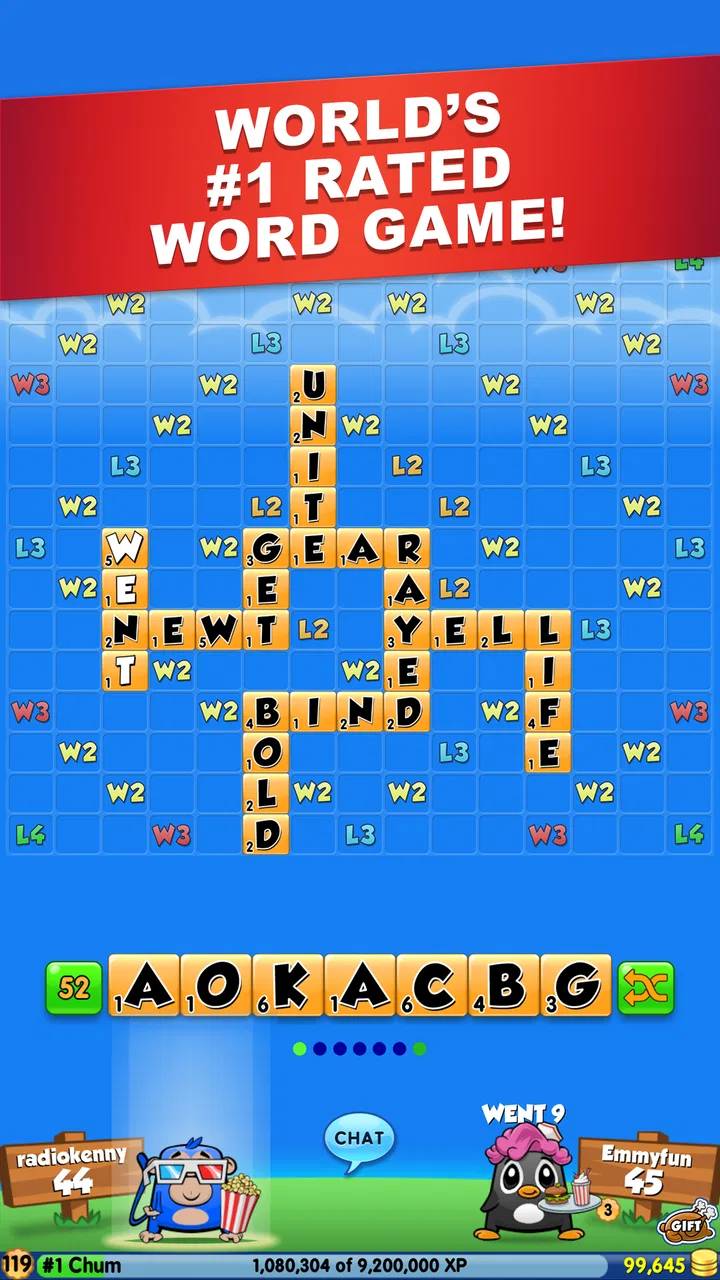
The capability I kept coming back to is the board-based word-building system. Instead of asking me only to recognize a word from mixed letters, the game makes me decide how that word should occupy a shared playing area. Every letter has value, but its position can matter just as much. A modest word in the right place may be more useful than a longer word played without a plan.
That distinction gives Word Chums a more strategic feel than many quick word apps. In a typical anagram game, I can focus on speed and accuracy. Here, I have to think about the shape of the board. A move can open a valuable line, block an opponent, connect with an existing word, or leave a promising square exposed. The best play is often not the most impressive word I can see.
I also like that this makes ordinary vocabulary feel useful. I do not need to know obscure dictionary entries to participate. Familiar short words can help me connect sections of the board, control awkward spaces, or use awkward letters efficiently. That lowers the barrier to entry without removing the satisfaction of improving over time.
The real skill is converting a good word into a good position. That is the detail I would explain to a friend before recommending the game. If you approach every turn as “find the biggest word,” the board can feel frustrating. If you look at the move as a combination of letters, placement, and future options, the matches become much more involving.
Reading the board instead of chasing points
My most useful habit was to pause before committing a move and inspect the open edges of the board. I looked for places where a word could be extended, crossed, or used to create several smaller combinations. This was especially important when my rack contained difficult letters. Playing them immediately might produce a respectable score, but saving the right letter for a better connection could be more valuable.
Another practical lesson is to avoid building a board that is too generous. A long, open arrangement can look attractive because it creates many possible words for me, but it may also give the other player multiple ways to reach valuable spaces. I started treating the board as territory: sometimes I wanted to expand, and sometimes I wanted to keep the structure compact and less inviting.
This is where the game separates patient players from people who simply know many words. A player with a smaller vocabulary can still compete by noticing opportunities and limiting unnecessary openings. Conversely, a player who knows plenty of words can waste turns by placing them carelessly. That balance is one reason I found the matches more thoughtful than the cheerful presentation initially suggests.
How a turn feels in practice
A normal turn has a comfortable rhythm. I examine the letters available to me, scan the existing words, test a few possible placements, and then decide whether the immediate score is worth the position it creates. The pace is much less demanding than a timed word challenge, so I can play in short visits without feeling that I have missed the entire experience.
That makes it suitable for small gaps in the day. I could make a move during a coffee break, put the phone away, and return later with the board still giving me something to think about. It does not require the same uninterrupted attention as a long strategy game, but it rewards returning with a clear plan rather than tapping through turns automatically.
The slower structure also changes how I judge a loss. When a match goes badly, I can usually identify a decision that caused trouble: opening a useful lane, spending a flexible letter too early, or focusing on a visible score instead of the next exchange. That sense of responsibility is satisfying because improvement feels practical. I am not merely hoping for better letters next time.
A realistic everyday match
Imagine starting a game while waiting for a train. You have only a few minutes, so you make a safe opening move rather than searching for a perfect one. Later, during lunch, the opponent has extended the board toward a valuable area. You now have two choices: take a smaller score that keeps the position closed, or play a more ambitious word that may lead to a larger follow-up.
That is the kind of situation where the game works well for me. The match stretches across ordinary interruptions, but each return has a clear question waiting. I do not need to replay the whole board in my head from memory; I can inspect the current position and make one meaningful decision. The game fits around my day instead of demanding that my day fit around it.
For a family or friend group, this structure can also make the game feel more personal than a solo score chase. A match develops its own history through cautious moves, surprising comebacks, and the occasional decision that looks harmless until the next turn. I would recommend it to people who enjoy a quiet rivalry more than a purely private puzzle.
Where the design helps, and where it asks for patience
I see the design’s patience as both its clearest strength and its main point of friction: the board gives decisions room to matter, but it does not suit every spare moment or mood. In this section, I would weigh that trade-off against the game’s approachable word play and optional purchases. The result is a clearer sense of whether its longer match rhythm fits your habits.
The strongest use case is relaxed competitive play
Word Chums is at its best when I want a word game with room to think. It suits someone who enjoys board-game decisions but does not want a complicated rulebook. The familiar word format makes the first match easy to understand, while the placement choices provide enough depth to keep experienced players from solving the same simple puzzle repeatedly.
It is also a good option for players who prefer asynchronous-feeling sessions and short visits, although the exact rhythm will depend on the match and the person playing. I would not choose it when I want instant action or a constant stream of new puzzles. Its appeal comes from a board that develops over time, not from rapid-fire variety.
For language learners, the game can be useful as a gentle way to notice spelling patterns and letter combinations. I would keep expectations realistic, though. It is not a structured vocabulary course, and playing it will not replace deliberate study. Its value is that it encourages repeated attention to words in a context where placement gives them a purpose.
What can become frustrating
The same board depth that makes the game interesting can make it feel slow. If I am in the mood for immediate feedback, waiting for a thoughtful match to develop may test my patience. A player who dislikes turn-based competition or prefers clear, fast conclusions may enjoy a conventional timed word puzzle more.
There is also a social trade-off. The game is more engaging when I have an opponent whose style I enjoy, but a mismatch in pace or seriousness can reduce the fun. Someone who wants a purely solo experience may find the shared-board format less satisfying than a single-player word search. I would decide based on whether the idea of responding to another player sounds appealing or burdensome.
Because it is free, the game includes in-app purchases ranging from $0.99 to $49.99 per item. That does not make the download expensive, but it is still worth remembering before handing the device to a child or treating every optional item as harmless. I prefer to approach free games with a clear spending limit, particularly when the basic match already provides the main reason to play.
The Everyone content rating makes the game broadly accessible, but age suitability is not the same as suitability for every personality. A child who enjoys words and patient turns may take to it immediately. A child looking for constant action may abandon it quickly. The rating tells me the content is approachable; it does not guarantee that the pace will match every player.
How it compares with familiar alternatives
Compared with a crossword app, Word Chums gives me less of a fixed clue-solving journey and more control over the problem. A crossword asks me to work through a designed grid, while this game asks me to create useful connections on a changing board. I prefer the latter when I want competition and replayable decisions, but I would choose a crossword when I want a solitary, more deliberate language challenge.
Compared with a timed anagram game, it is calmer and more positional. Timed alternatives are better for testing quick recall, concentration, and speed under pressure. Word Chums is better when I want to consider consequences and return to a match later. Neither approach is automatically superior; they satisfy different moods.
It also differs from a standard word search because discovery is only one part of the task. Finding a possible word is not enough. I have to decide whether it belongs on the board now, whether it creates a weakness, and whether a shorter option would preserve flexibility. That extra layer is the reason I would keep this installed instead of using it only once.
Three habits that improve the experience
Scan for future connections before chasing the largest score. A word that keeps several directions available can be more useful than one that fills a tempting space and leaves no practical follow-up.
Treat difficult letters as planning problems rather than emergencies. I found that forcing them into the first acceptable word often produced a weaker board. Waiting for a crossing opportunity can make the same letters easier to use.
Review the position after every opponent move. Do not assume the previous plan still applies. A new extension may have closed one route while creating another, so the best response may be defensive even when a high-scoring word is visible.
These habits are more valuable than memorizing a long list of rare words. They also make losses easier to learn from. After a match, I can ask whether I misread the board, exposed a useful square, or spent a flexible option too soon. That kind of self-review gives the game a small but genuine improvement loop.
Who will get the most from it
I would recommend Word Chums to people who like word games with a board-game mindset. It is particularly appealing if you enjoy friendly competition, can tolerate an unhurried match, and want something that can be played in small pieces. The game is approachable enough for casual players, yet the board gives regular players room to develop better judgement.
It is less suitable for anyone who wants a fully guided vocabulary lesson, a purely solo puzzle collection, or a fast arcade challenge. If your favorite word-game moment is beating a countdown, another format will probably feel more rewarding. If you dislike the possibility that an opponent’s move can change your plan, the shared board may feel like unnecessary friction.
I would also think about spending preferences. The basic download is free, but the available purchase range means I would check my device settings and personal limits before making it a regular family game. That is not a reason to dismiss it, just a sensible part of deciding whether the free-to-start model fits your habits.
From a device perspective, the game supports Android devices running version 6.0 or later. That gives it a fairly broad reach for players using older compatible phones or tablets, while the current version keeps the experience aligned with its ongoing release history. The developer is PeopleFun, a name associated here with a game that has remained focused on accessible word-board play rather than trying to become an entirely different genre.
My recommendation after playing
What I like most is that the game makes a familiar activity feel consequential without making it intimidating. I can start with ordinary words, learn by watching how the board changes, and gradually become more deliberate about openings, connections, and defensive placement. The experience rewards attention rather than demanding specialist knowledge from the first turn.
My main reservation is pace. This is not the choice I would make when I want a quick burst of words and an immediate result. It also asks me to accept the unevenness that comes with playing against another person and with using a free game that offers optional purchases. Those are manageable limitations, but they should be part of the decision rather than surprises after installation.
Overall, I see Word Chums as a strong pick for a relaxed word-board match, especially when I want a game I can revisit throughout the day. Its best feature is not simply that it lets me make words; it makes me think about what those words do to the board. If you enjoy turning a small vocabulary decision into a larger tactical choice, this is worth trying.
FAQs for Word Chums
01What is Word Chums, and how does it differ from other word games?
Word Chums is a social word game that combines elements of classic word games with engaging graphics and interactive features. Unlike traditional word games, Word Chums includes character customization, vibrant visuals, and a competitive multiplayer mode. Players can challenge friends or random opponents, making it a more dynamic and social experience.
02Is Word Chums free to play, and are there any in-app purchases?
Word Chums is free to download and play, but it offers in-app purchases. These purchases can range from ad removal to buying chumbot hints or coins to enhance gameplay. While the basic version is enjoyable, some users might find the additional purchases helpful for more strategic play and faster progression.
03Can Word Chums be played offline, or is an internet connection necessary?
An internet connection is required to play Word Chums, as it is primarily a multiplayer game. The game focuses on real-time interactions with friends or other players online. However, practice modes or solo challenges are available but still require connectivity to update scores and track progress.
04What are the system requirements for installing Word Chums on my device?
Word Chums is compatible with both Android and iOS devices. For Android, it generally requires Android version 4.1 or later. For iOS devices, a version of iOS 9.0 or later is usually needed. It’s advisable to have a stable internet connection and sufficient storage space to ensure smooth installation and gameplay.
05How does the ranking system work in Word Chums, and can I compete with my friends?
Word Chums features a ranking system based on the points earned in matches. Players can rise through the ranks by winning games and completing challenges. You can easily connect with friends via social media or invite them directly, allowing you to compete on leaderboards and track each other’s progress in real-time.
Pros
- Engaging multiplayer mode with friends.
- Colorful and intuitive user interface.
- Variety of word challenges available.
- Regular updates with new features.
- Supports multiple languages.
Cons
- In-app purchases can be pricey.
- Occasional connectivity issues.
- Ads can be intrusive at times.
- Limited offline play options.
- Notifications can be overwhelming.

Word Chums
Gallery